Meetiyagoda Moonstone Mines: Visit Guide, No.7 & Taxi Fares
Watch moonstone come out of a hand-dug shaft, see it washed and cut, and buy it from a licensed showroom — 10 km from Hikkaduwa, with a fixed-price taxi there and back.
At the moonstone mines of Meetiyagoda you can stand over a gem shaft, watch the gravel being washed, and then hold the stones that came out of it. Meetiyagoda is a village a few kilometres inland from the coast between Ambalangoda and Hikkaduwa, in the Galle District. Most commercial moonstone in the world today comes from Sri Lanka, and this is where visitors to the south-west coast go to see it. Our pick is Moonstone Gems No.7, a licensed mine and showroom on Batapola Road. Every photo on this page is our own, taken there.
Hikkaduwa → Moonstone Gems No.7: Rs 5,200 for a mini car, fixed. Your driver waits while you look around.
Book this taxiHow moonstone is mined at Meetiyagoda
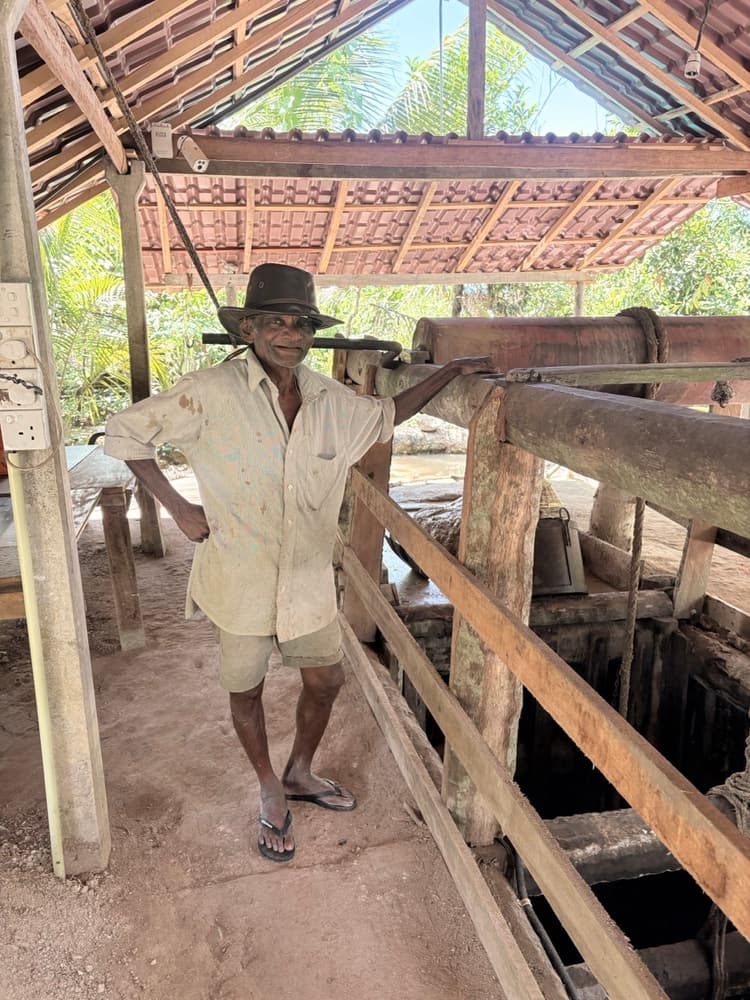
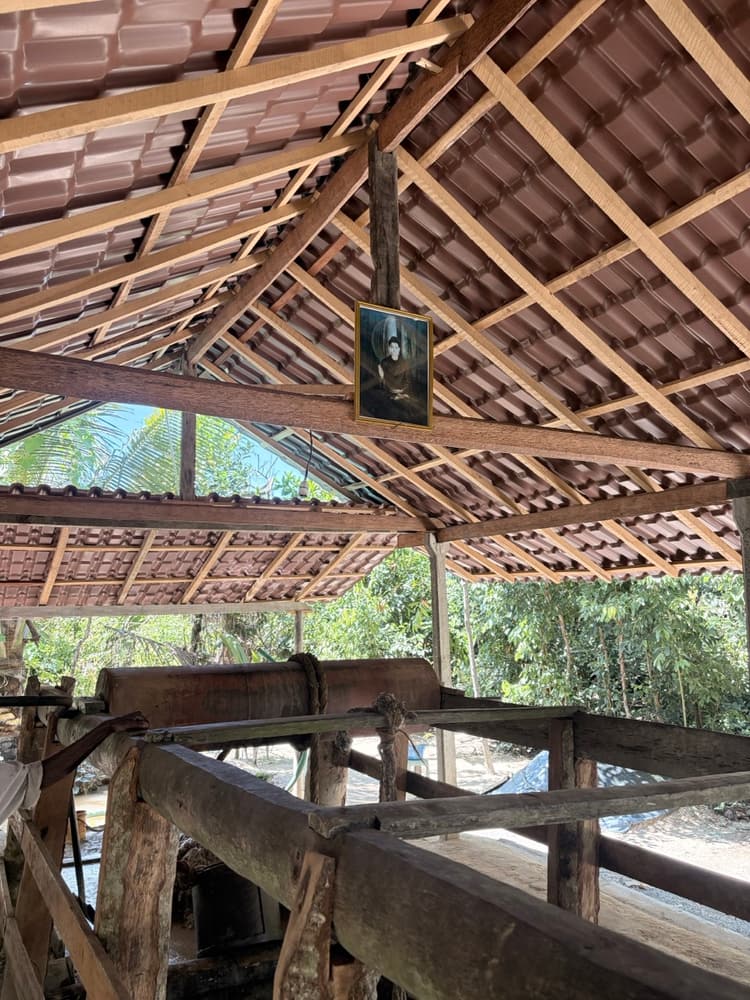
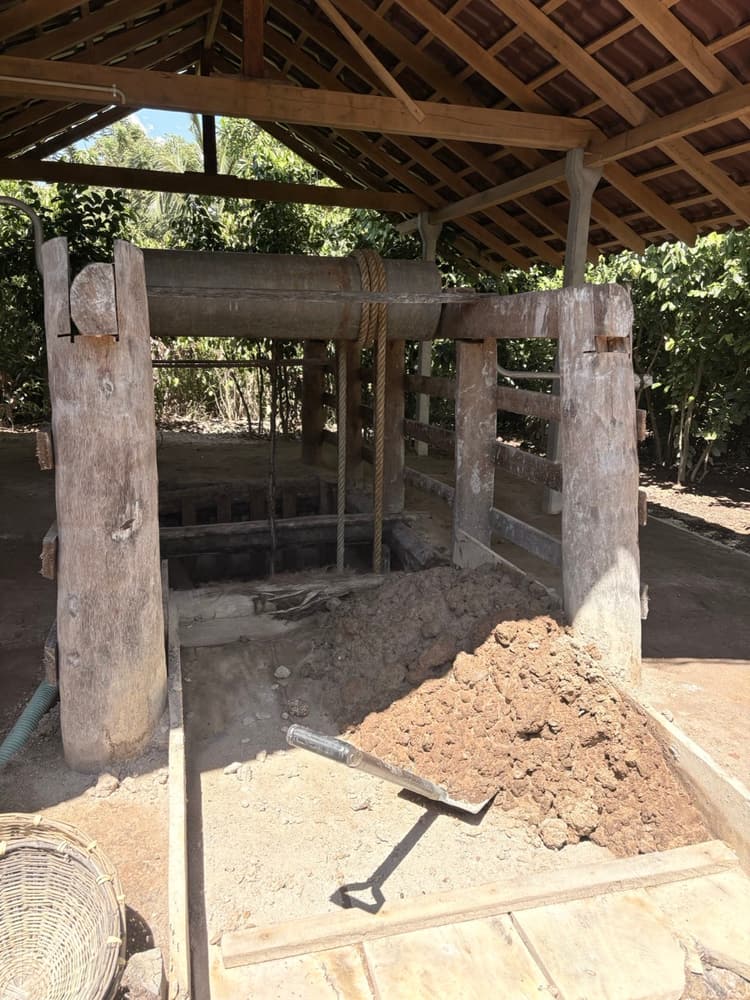
The mine at No.7 sits in a village garden under tiled-roof sheds. Each shed covers a narrow shaft lined with square timber frames that hold the walls up all the way down to the gem-bearing gravel; a lamp lights the shaft so you can look down. Above the shaft a heavy log winch, turned by hand, brings the gravel up in baskets.
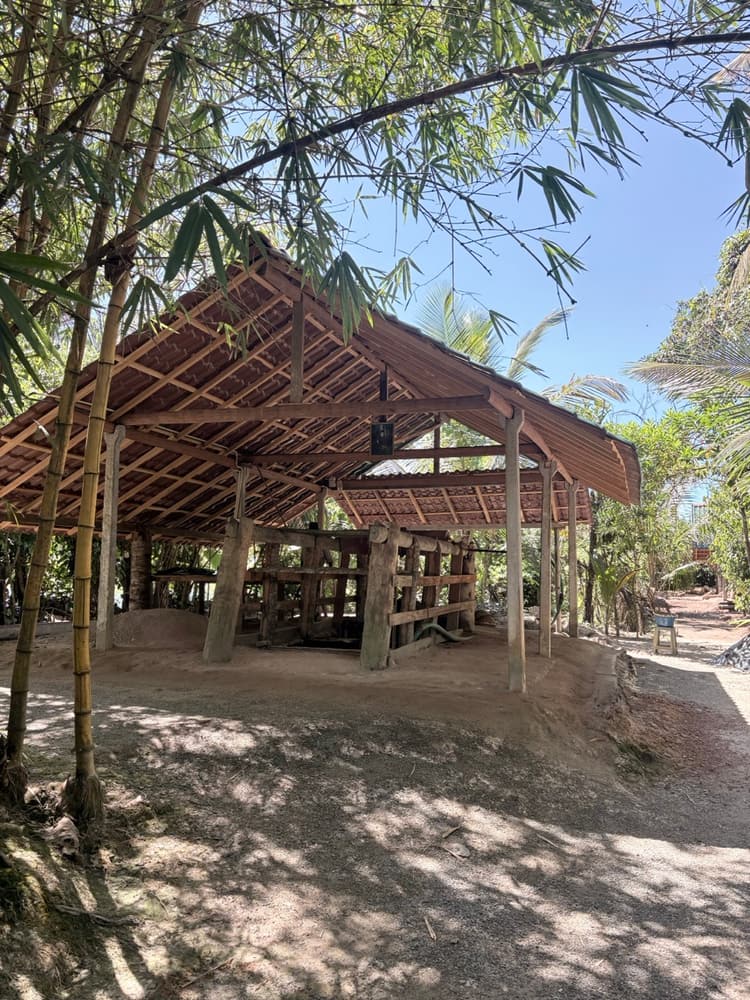
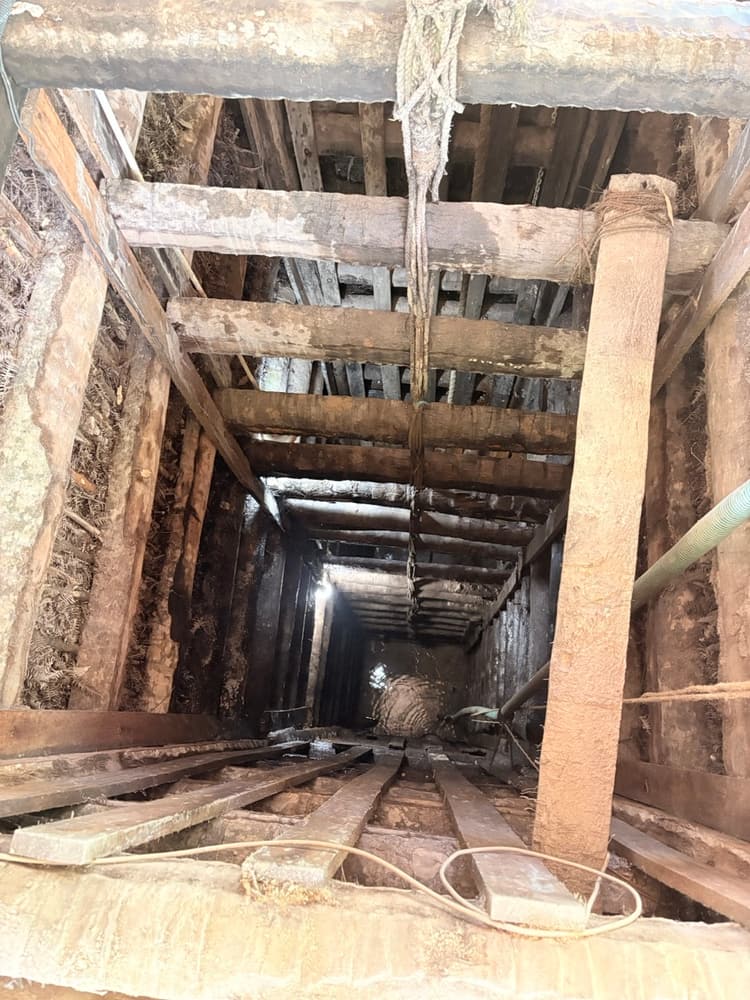
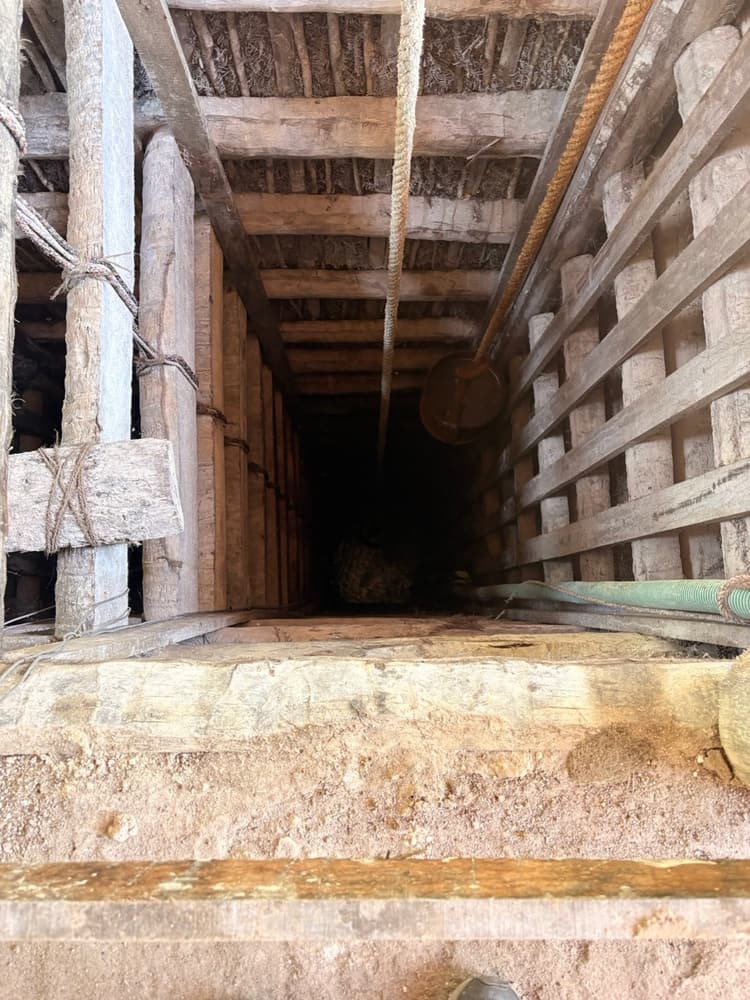
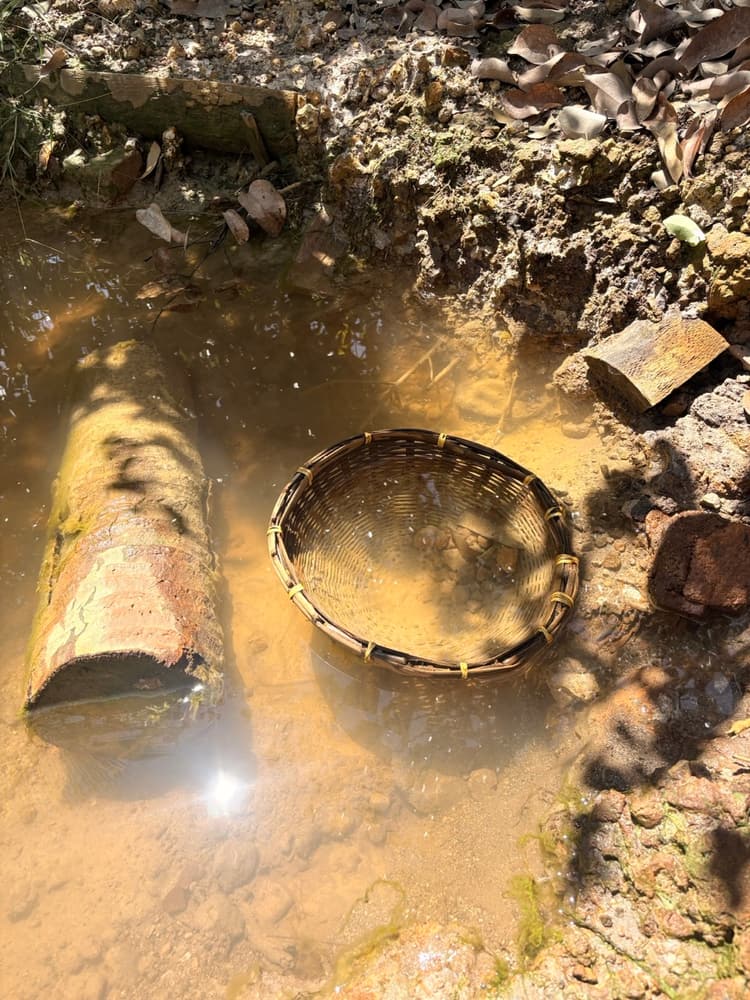
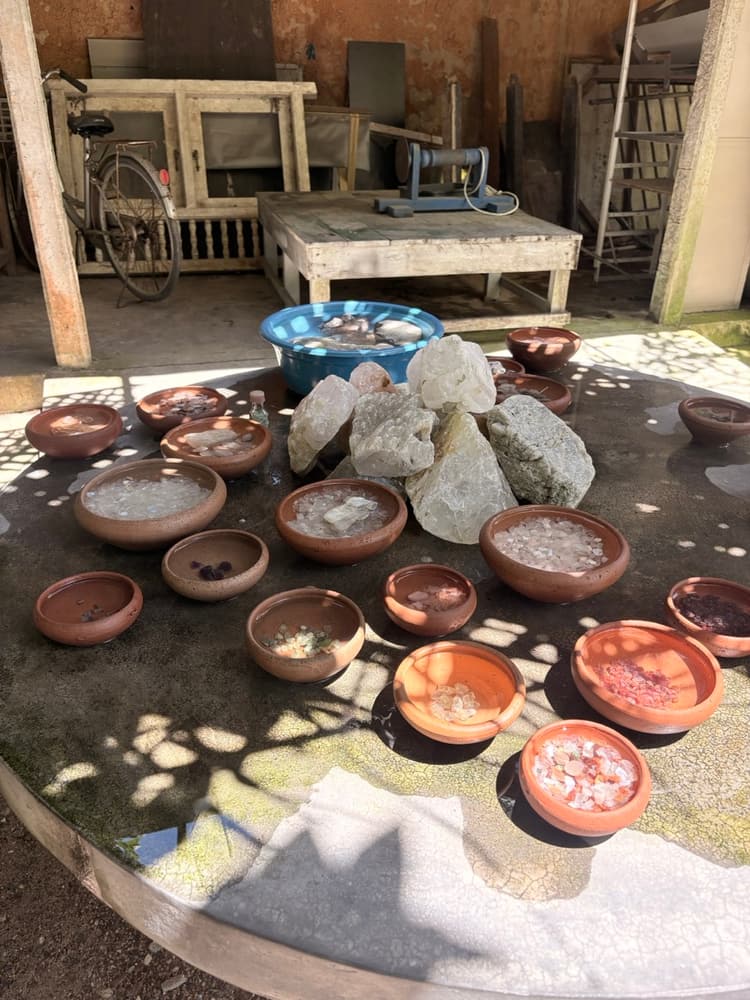
At the surface the gravel is piled beside the shaft and then washed in a shallow pit with a woven basket, swirled until the lighter earth runs off and the heavier stones are left behind. The stones are sorted by hand into clay bowls, and the best are cut and polished on a wheel in the workshop yard. It is simple, slow work, done the way it has been for generations.
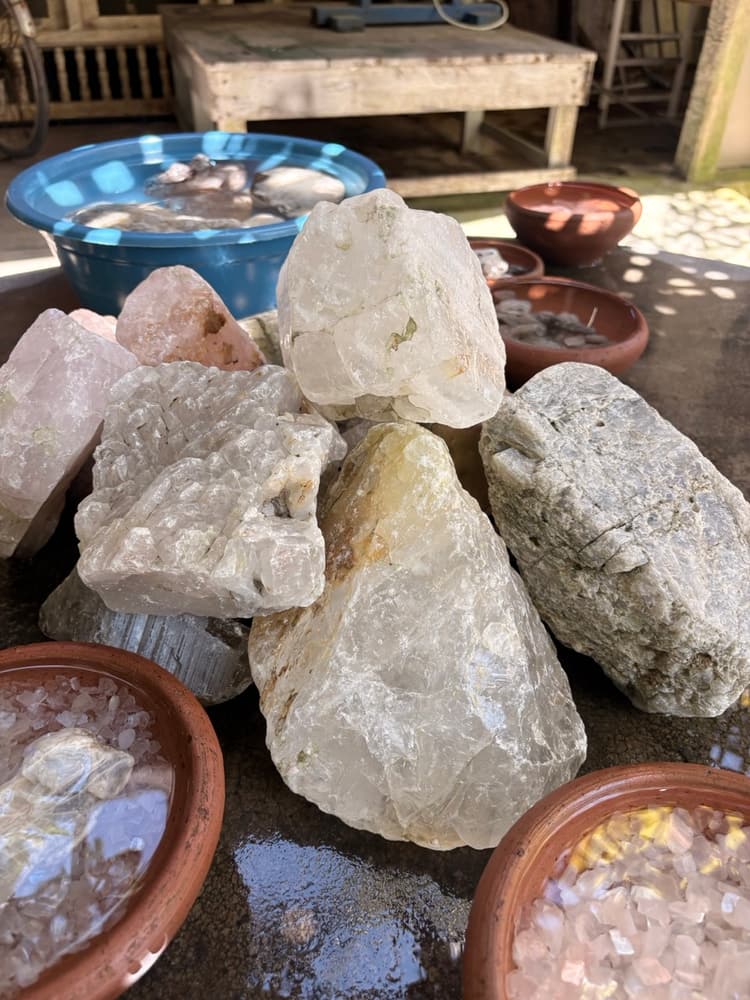
What is moonstone?
Moonstone is a feldspar — a sodium potassium aluminium silicate — and its name comes from the soft, moving sheen that seems to float under the surface. That glow is called adularescence: light scatters between very thin alternating layers inside the stone, so a good moonstone shows a milky or bluish light that shifts as you turn it. Moonstone is one of the birthstones for June.
Moonstone is found in several countries, from India and Myanmar to Madagascar, Norway and the United States, but most commercial moonstone today comes from Sri Lanka. Britannica points to the Dumbara area in the central hills as a classic source; Meetiyagoda, on the south-west coast, is the one visitors can see in person, and the Gemological Institute of America holds a moonstone from Meetiyagoda in its reference collection. So when you hear that Meetiyagoda is "the world's only moonstone mine", treat it as a sales line — but it is a genuine, working source of the stone.
Staying in Galle? Galle Fort → No.7 is Rs 6,480 for a mini car, fixed.
Book this taxiMoonstone Gems No.7 — our pick
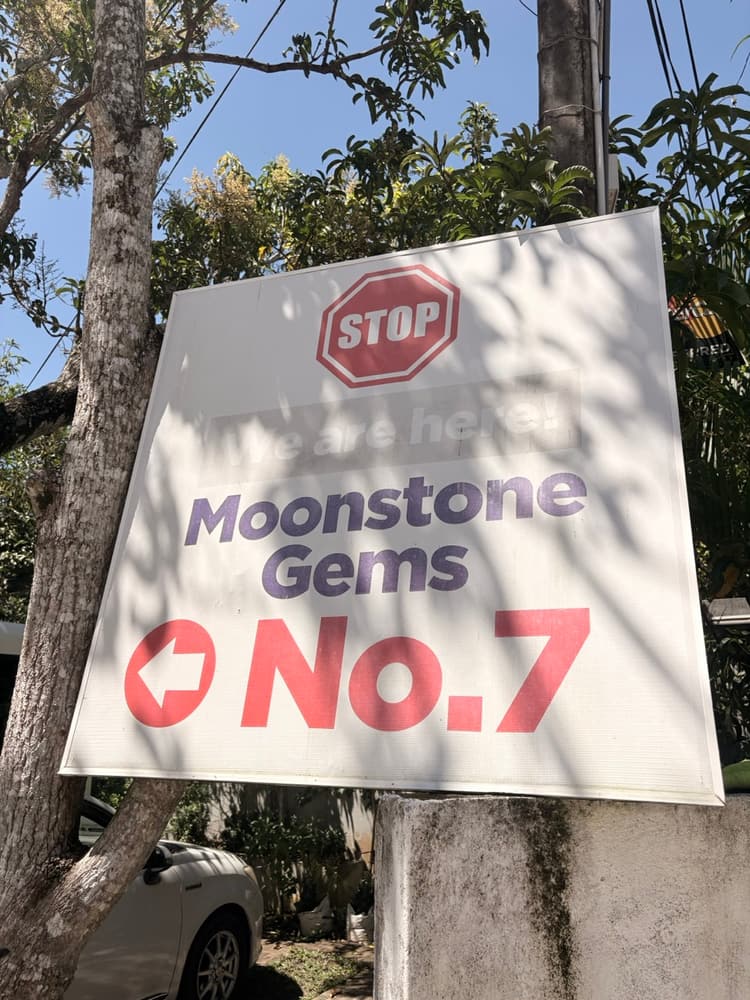
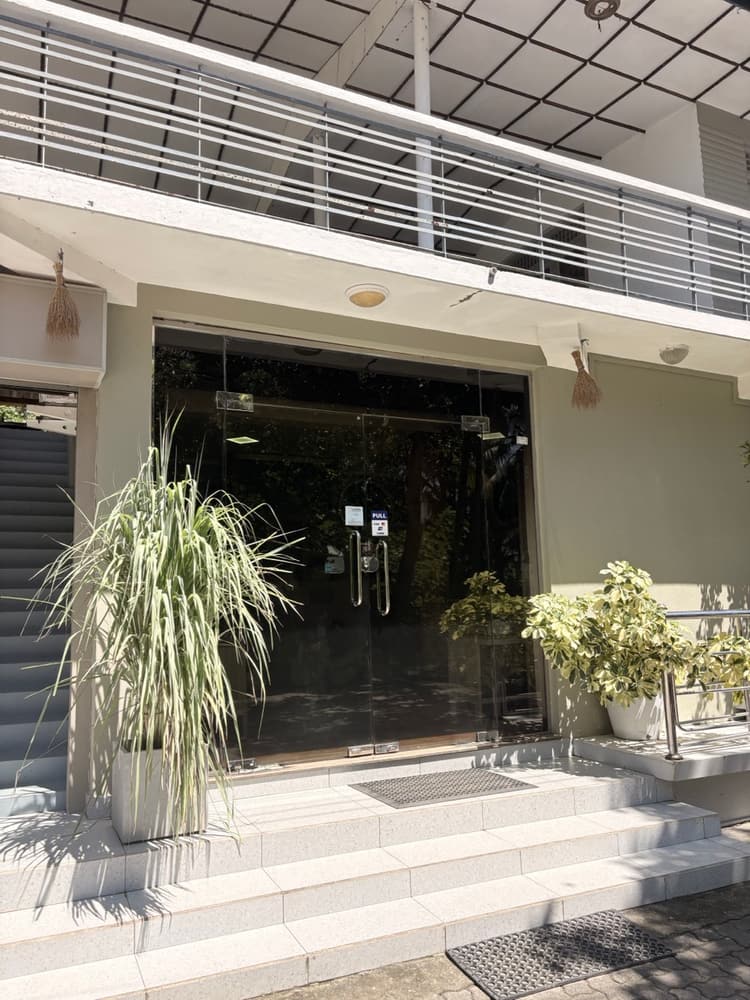
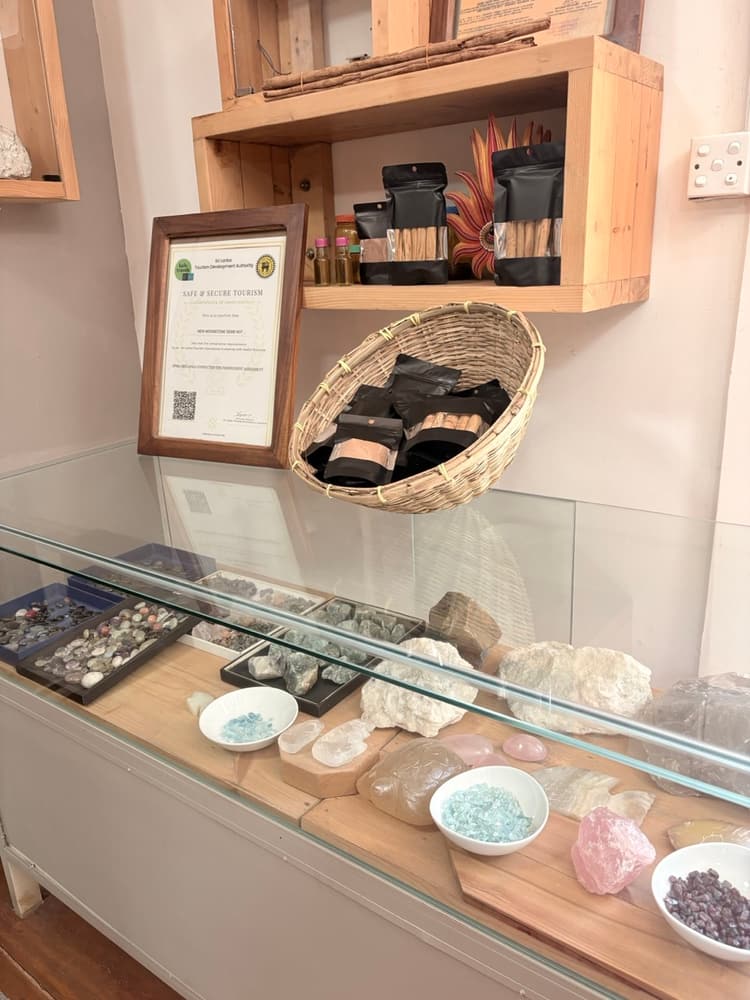
You will pass several moonstone shops along Batapola Road. We take our guests to Moonstone Gems No.7 — signposted simply "No.7" — because it shows the whole process in one place: the shafts and washing pit in the garden, the rough stones and cutting wheel in the yard, and a bright, organised showroom. It is also properly licensed: "New Moonstone Gems – No 07", Batapola Road, Meetiyagoda, is on the National Gem and Jewellery Authority's 2024 list of licensed jewellery dealers (licence 20241JL5804), and a Sri Lanka Tourism Development Authority certificate made out to the shop hangs on the showroom wall.
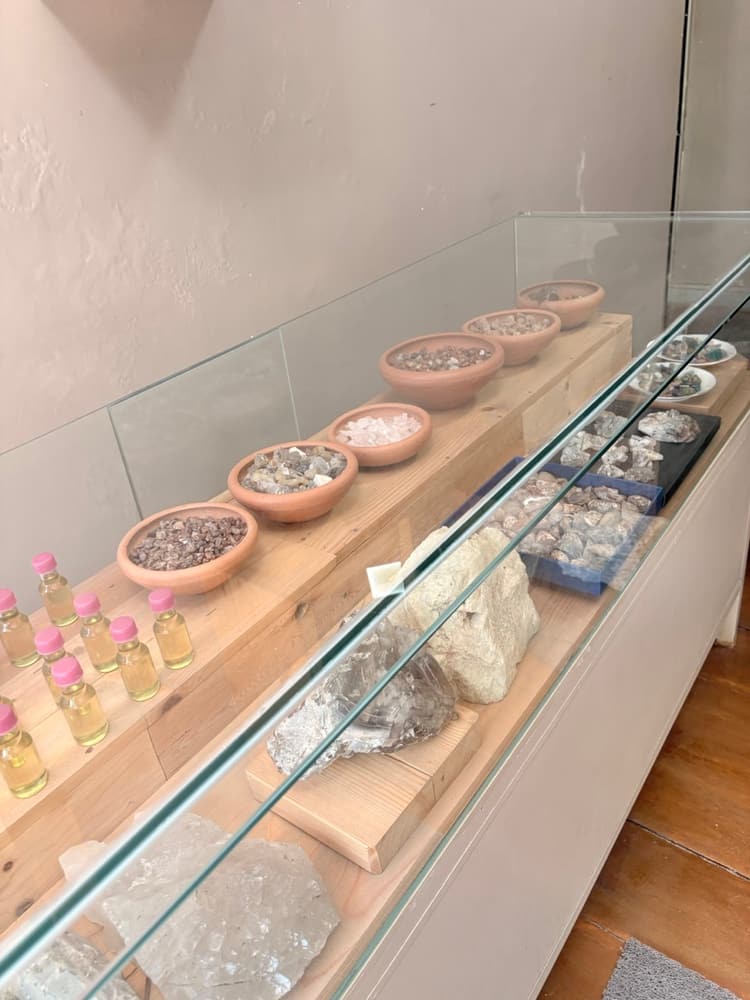
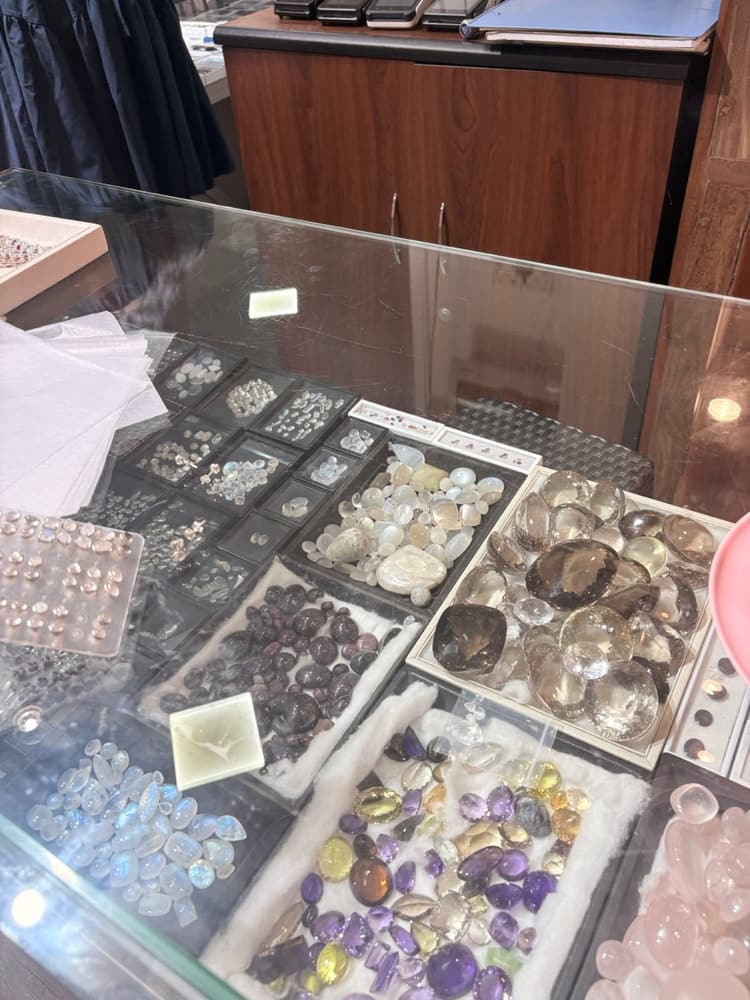
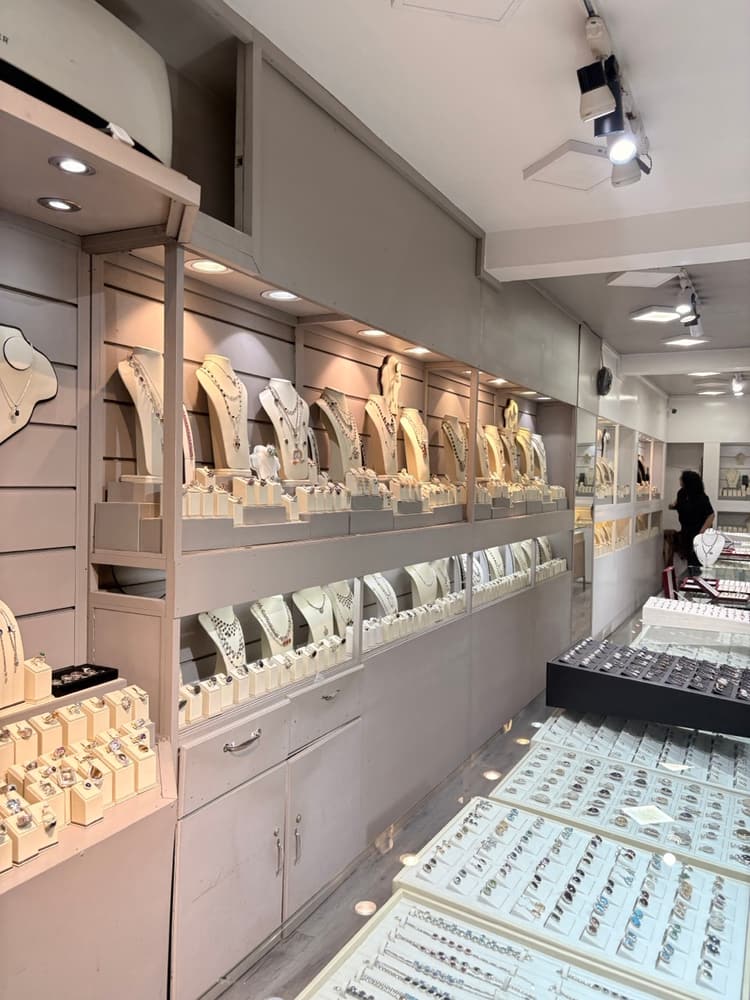
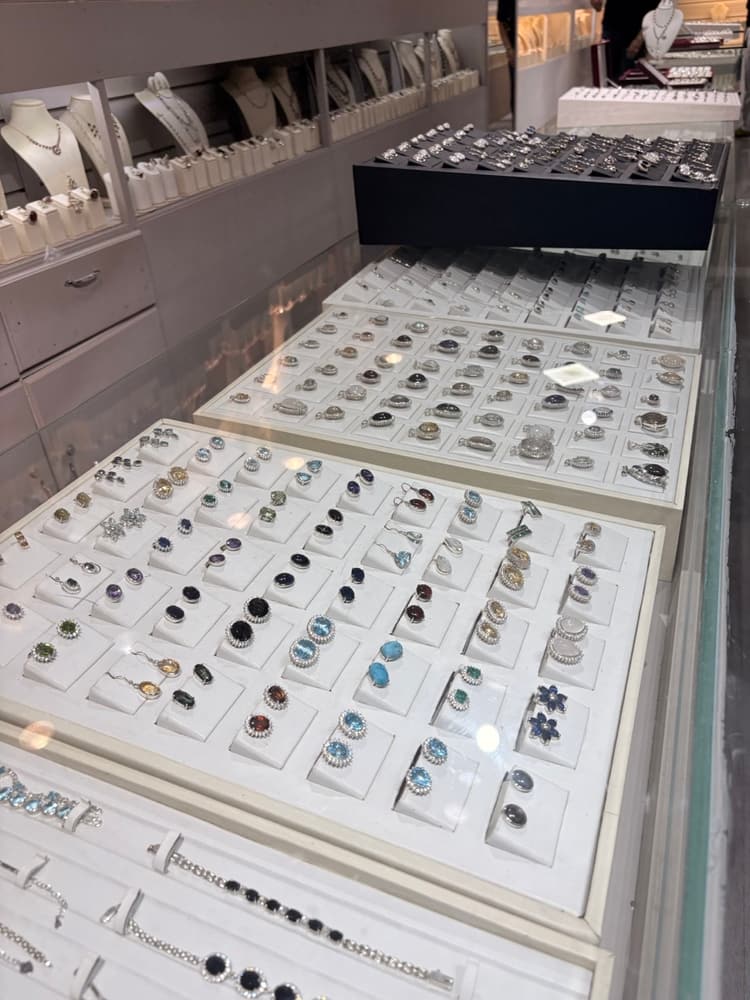
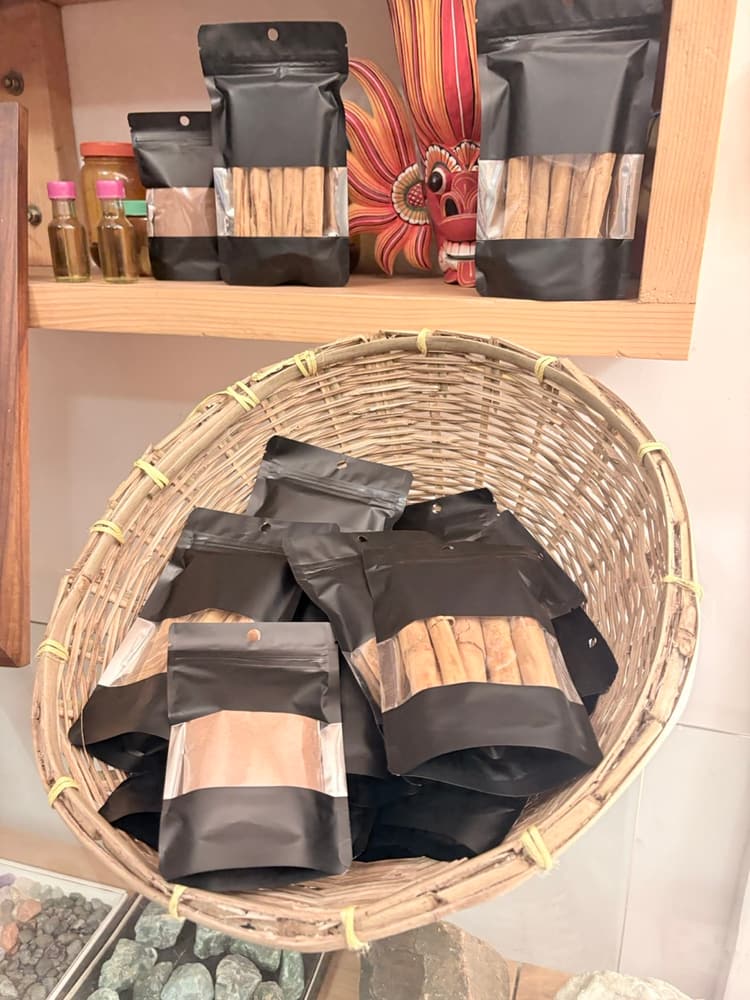
Inside, the counters start with bowls of rough stones, so you can see what comes out of the ground, then move to loose cut moonstones and other gems, and a long jewellery room of rings, pendants and necklaces. There is cinnamon, small bottles of oil and the odd carved elephant too. There is off-road parking, so your TaxiGo driver waits on site. The phone number on the NGJA list is 071 170 4159.
Buying moonstone with confidence
- Look in daylight. Turn the stone slowly: a good moonstone shows a sheen that floats and moves, not a flat white colour.
- Buy from a licensed dealer and keep a receipt that names the stone, its weight and whether it is natural.
- For anything valuable, get it tested. The NGJA Gem Testing Laboratory in Colombo issues certificates, and any NGJA certificate can be checked online.
- Take your time. You are never obliged to buy, and it is normal to compare a few pieces before you decide.
See the mine, then carry on down the coast
Book Hikkaduwa → No.7, and No.7 → Galle, Bentota or Colombo — or message us for one booking with a stop.
Nearby: the tsunami memorial at Peraliya and Ambalangoda
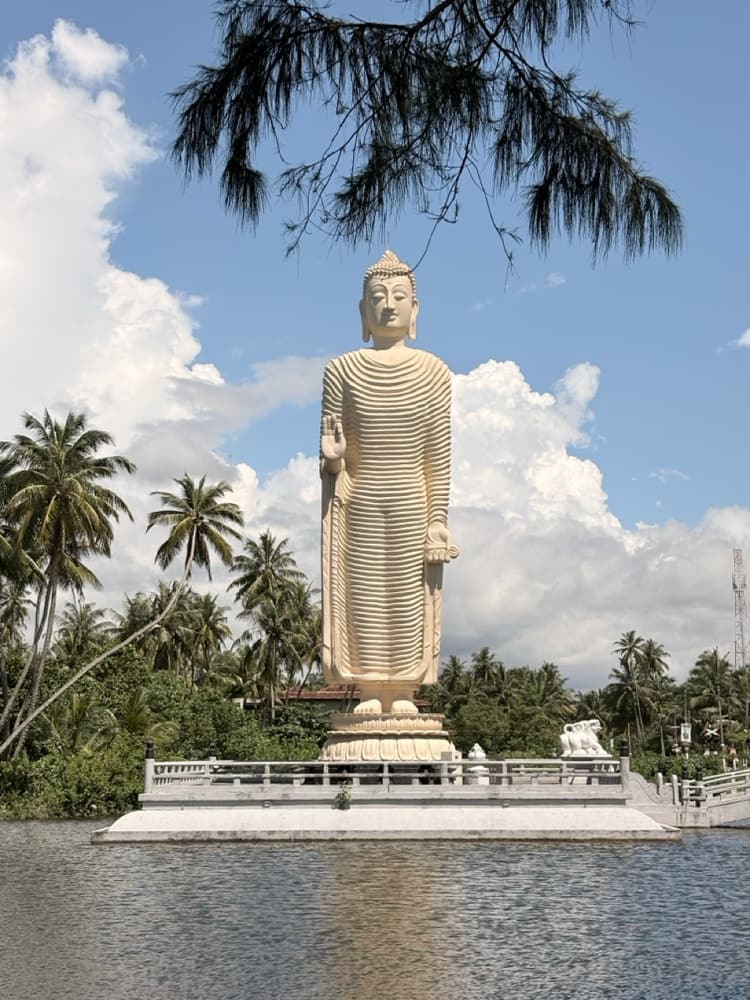
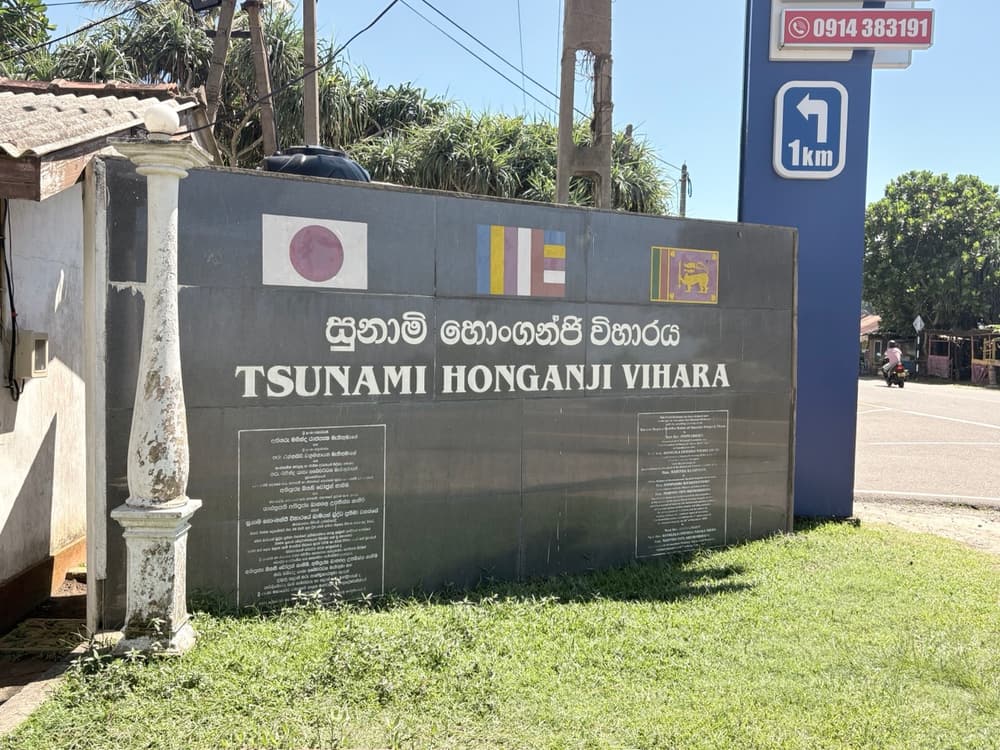
Six kilometres from the mine, by the coast road at Peraliya, stands the Tsunami Honganji Viharaya. On 26 December 2004 the tsunami struck the crowded Matara Express train here — the largest rail disaster in history, with an estimated 900 to 1,700 deaths. The 30-metre Buddha statue, donated by Japan and modelled on the Bamiyan Buddha, was built in their memory. It is a short, quiet stop on the way to or from Hikkaduwa.
In the other direction, Ambalangoda (about 9 km) is famous for its hand-carved traditional masks — you will see one on the shelf at No.7. More on the area in our Hikkaduwa guide.
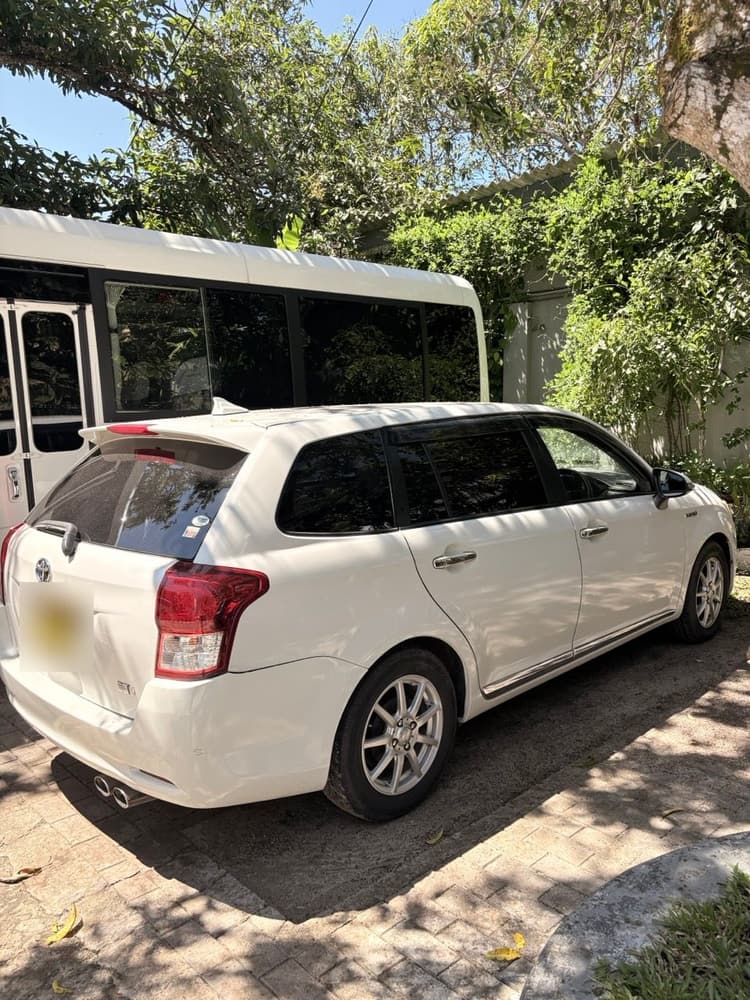
No.7 → Tsunami Honganji Viharaya, Peraliya: Rs 4,280 for a mini car.
Book this taxiTaxi fares to the Meetiyagoda moonstone mine
Fixed prices to Moonstone Gems No.7, per vehicle, including the driver and fuel. Tap a route for its booking page — the fare there is the same. Distances are measured by road (how we measure).
Taxi fares from the moonstone mine
Carrying on after your visit? These are the fares from No.7 to the memorial at Peraliya, the beaches and the airport.
| From No.7 to | Distance | Time | Mini | Sedan | Van |
|---|---|---|---|---|---|
| Tsunami Honganji Viharaya, Peraliya | 6 km | 13 mins | Rs 4,280US$14 | Rs 4,700US$16 | Rs 7,400US$25 |
| Ambalangoda | 8 km | 18 mins | Rs 4,740US$16 | Rs 5,200US$18 | Rs 8,200US$28 |
| Hikkaduwa | 10 km | 20 mins | Rs 5,200US$18 | Rs 5,700US$19 | Rs 9,000US$31 |
| Ahungalla | 19 km | 37 mins | Rs 5,350US$18 | Rs 5,935US$20 | Rs 8,590US$29 |
| Galle Fort | 28 km | 51 mins | Rs 7,600US$26 | Rs 8,320US$28 | Rs 12,090US$41 |
| Bentota | 32 km | 53 mins | Rs 7,320US$25 | Rs 8,100US$28 | Rs 11,800US$40 |
| Unawatuna | 39 km | 56 mins | Rs 8,790US$30 | Rs 9,675US$33 | Rs 14,120US$49 |
| Weligama | 58 km | 1 hours 11 mins | Rs 12,200US$42 | Rs 13,080US$45 | Rs 19,470US$67 |
| Mirissa | 63 km | 1 hours 23 mins | Rs 13,200US$45 | Rs 14,130US$49 | Rs 21,050US$73 |
| Colombo | 105 km | 1 hours 53 mins | Rs 16,350US$56 | Rs 17,175US$59 | Rs 24,170US$83 |
| Colombo Airport (CMB) | 126 km | 1 hours 51 mins | Rs 18,240US$63 | Rs 19,170US$66 | Rs 27,190US$94 |
| Udawalawe National Park | 154 km | 2 hours 25 mins | Rs 22,160US$76 | Rs 23,230US$80 | Rs 32,970US$114 |
Why travellers book TaxiGo for the moonstone mine
- Fixed price for the whole vehicle — no meter, no haggling on the roadside.
- We take you to No.7, the shop you asked for — not a stop of the driver's choosing.
- Your driver waits in the shop's car park, then takes you on to Galle, Bentota, Colombo or the airport.
- Measured distances and live fares — the price on this page is the price you book.
- Free cancellation up to 24 hours before pickup (policy) and WhatsApp support.
More on this coast: Hikkaduwa taxi rates · Galle taxi rates · Bentota taxi rates · Galle Fort guide · Brief Garden · Kande Viharaya, Aluthgama.
Frequently asked questions
Where are the Meetiyagoda moonstone mines?
Meetiyagoda is a village in the Galle District of Sri Lanka's Southern Province, a few kilometres inland from the coast between Ambalangoda and Hikkaduwa. Moonstone Gems No.7, the mine and showroom we recommend, is on Batapola Road in Meetiyagoda.
How far is the moonstone mine from Hikkaduwa?
About 10 km by road, around 20 minutes. A TaxiGo taxi from Hikkaduwa to No.7 is Rs 5,200 for a mini car, Rs 5,700 for a sedan and Rs 9,000 for a van — a fixed price for the whole car.
How far is the moonstone mine from Galle, Bentota and Colombo?
By road to No.7: Galle Fort about 28 km (around 50 minutes), Bentota about 31 km (around 50 minutes), Ahungalla about 19 km (35 minutes) and Colombo about 106 km (around 2 hours). The fares for each are in the tables on this page.
Is Meetiyagoda the only moonstone mine in the world?
No. Moonstone is found in several countries — Wikipedia lists deposits in Sri Lanka, India, Myanmar, Madagascar, Norway, Australia, Mexico, the United States and others. What is true is that today most commercial moonstone comes from Sri Lanka, and Meetiyagoda is the moonstone mine most visitors to Sri Lanka can see for themselves.
How is moonstone mined at Meetiyagoda?
At No.7 you see it done the traditional way: narrow shafts lined with square timber frames go down to the gem-bearing gravel, a hand-turned log winch brings the gravel up, and the gravel is washed in woven baskets until the heavier stones are left. The rough stones are then sorted, cut and polished.
What is moonstone and why does it glow blue?
Moonstone is a feldspar mineral. Its soft, floating sheen — called adularescence — comes from light scattering between very thin alternating layers inside the stone. Moonstone is also one of the birthstones for June.
How do I know a moonstone is genuine?
Buy from a licensed dealer, keep a receipt that describes the stone, and for anything valuable ask for a report from the National Gem and Jewellery Authority (NGJA) Gem Testing Laboratory in Colombo. NGJA certificates can be checked online.
Is Moonstone Gems No.7 a licensed shop?
Yes. "New Moonstone Gems – No 07" on Batapola Road, Meetiyagoda, is on the National Gem and Jewellery Authority's 2024 list of licensed jewellery dealers (licence 20241JL5804), and it displays a Sri Lanka Tourism Development Authority certificate in the showroom.
Can I visit the moonstone mine on the way to Galle or Colombo?
Yes. Book a taxi from your hotel to No.7 and another from No.7 to where you are going next, or ask us for one booking with a stop. The shop has off-road parking, so your driver can wait while you look around. A TaxiGo taxi from No.7 to Galle Fort is Rs 7,600 for a mini car, Rs 8,320 for a sedan and Rs 12,090 for a van — a fixed price for the whole car.
What else is near the Meetiyagoda moonstone mine?
The Tsunami Honganji Viharaya at Peraliya — the tall Buddha statue that marks the 2004 tsunami train disaster — is about 6 km away, and Ambalangoda, known for its traditional masks, is about 9 km away. Hikkaduwa beach is about 10 km away.
Is the TaxiGo fare per person?
No. The fare is for the whole car or van — mini cars suit two people with light luggage, sedans three and vans up to eight — and includes the driver and fuel.
Your moonstone mine trip, sorted
Fixed price from your hotel to No.7 and on to wherever you are going next — book now or message us on WhatsApp.
Transfers
Hotels
Contact us

About Taxigo Lanka: Your Trusted Travel Partner in Sri Lanka
Our Commitment: Quality, Affordability, and Safety. Welcome to Taxigo Lanka, where we are redefining transportation across Sri Lanka. Our core commitment is simple: to offer you the finest taxi service at the most affordable rates nationwide, all while prioritizing your safety and comfort above everything else. As a leading transport provider in Sri Lanka, we specialize in offering seamless, reliable, and trustworthy travel experiences, whether it's a quick city hop, a crucial airport transfer, or a multi-day island tour.
Taxi
Go
